Signed in as:
filler@godaddy.com
Securing funding can be a game-changer for small businesses—but only if it's done strategically. Whether you're launching a new venture, expanding operations, or navigating a cash flow crunch, asking the right questions before accepting capital can mean the difference between growth and regret.
Here are the essential funding questions every business should ask:
1. 🧭What is the purpose of Funding
Are you looking to cover operational expenses, invest in marketing, purchase inventory, or scale your team? Clearly defining your funding goals helps determine the type of financing that fits best—whether it's a short-term loan, line of credit, or revenue-based funding.
2. 📊 How much do I really need?
It’s tempting to ask for more than you need “just in case,” but overfunding can lead to unnecessary debt and higher repayment obligations. Break down your costs and forecast your ROI to pinpoint the ideal amount.
3. 💰 What’s the true cost of capital?
Beyond interest rates, consider fees, repayment terms, and any penalties for early payoff. Ask for a full breakdown of the APR and total repayment amount over time. Transparency is key
4. 🧾 What documentation is required?
Some lenders require extensive paperwork—tax returns, bank statements, business plans—while others offer streamlined approvals. Knowing what’s expected upfront can save time and frustration.
5. ⏱ How quickly do I need the funds?
If you're facing an urgent need, traditional financing might not be fast enough. Alternative funding solutions can offer same-day approvals and disbursements but may come with different terms.
6. 📉 What happens if my revenue dips?
Ask about flexibility. Can payments be adjusted if your business hits a slow season? Will you be penalized for late payments? Understanding worst-case scenarios helps you plan responsibly.
7. 🤝 Is my lender a true partner?
The best funding providers offer more than money—they offer guidance, support, and a genuine interest in your success. Look for a funding partner who understands your industry and shares your vision.

Personalized service tailored to your unique needs.
Experienced professionals dedicated to your success.
Proven results that speak for themselves.
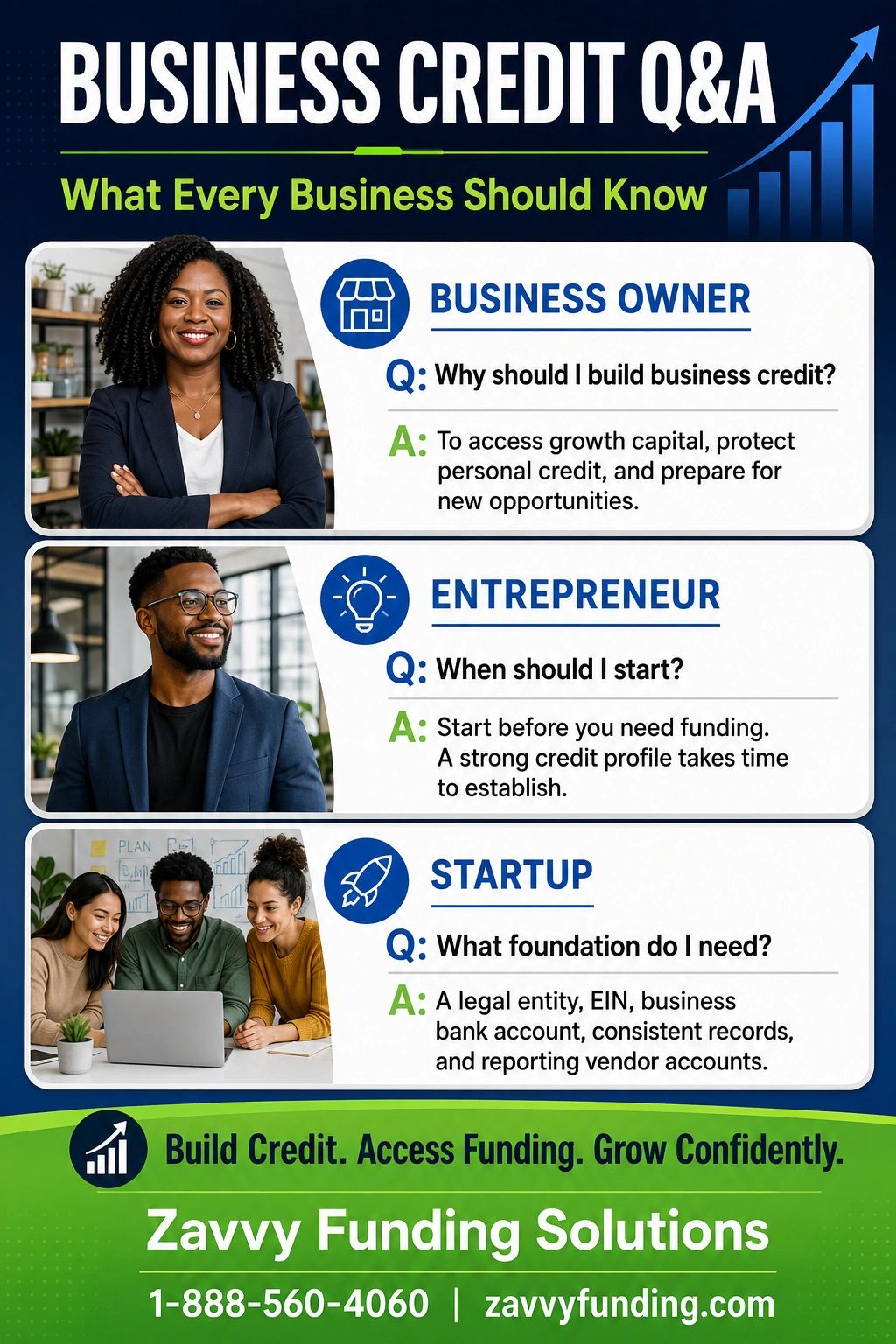
Business credit can help your company qualify for financing based on its own financial history rather than relying entirely on your personal credit. It also prepares the business for expansion, emergencies, equipment purchases, and larger contracts.
Your business should have:
These items help lenders and vendors confirm that your business is legitimate and properly established.
Separation makes bookkeeping and tax preparation easier while helping protect your personal credit and assets. It also allows your company to establish an independent financial identity.
Open accounts with vendors and suppliers that report payment activity to commercial credit bureaus. Use the accounts for legitimate business purchases and pay every invoice on time—or early when possible.
Years in business do not automatically create a strong credit profile. You need reporting accounts and documented payment activity. Review your files with Dun & Bradstreet, Experian Business, and Equifax Business to see what is currently being reported.
Yes. A strong profile may help your company qualify for higher limits, improved repayment terms, and more competitive rates. Approval still depends on the lender, revenue, cash flow, industry, and other underwriting requirements.
Review your commercial credit reports regularly for inaccurate addresses, duplicate accounts, missing payments, or outdated company information. Correcting errors early can protect your funding opportunities.
It can give your company more purchasing power without placing every expense on your personal credit. That capital may support hiring, inventory, marketing, equipment, technology, and additional locations.

As soon as the company is legally and operationally established. Building credit should be part of the startup foundation—not something considered only after financing is needed.
A startup should generally establish:
This foundation helps make the startup more credible and funding-ready.
It may qualify for certain vendor accounts, secured products, or financing that considers personal credit and a personal guarantee. Larger unsecured financing usually requires stronger revenue, operating history, cash flow, collateral, or established credit.
A D-U-N-S Number identifies a business in Dun & Bradstreet’s database. It may be useful for establishing a D&B credit file and may be requested by certain vendors, lenders, corporations, and government-related opportunities.
Open a small number of suitable reporting accounts, purchase only what the company needs, and pay according to the agreement. Early or on-time payments can help demonstrate financial responsibility.
Usually not. Too many applications can lead to unnecessary inquiries, rejections, and accounts the company cannot manage. Apply strategically and add new credit only when the startup can comfortably handle the payments.
Keep all public and financial records consistent. Maintain organized bookkeeping, avoid overdrafts, deposit revenue into the business account, file required reports, and ensure licenses and registrations remain active.
Startups often experience uneven cash flow while purchasing inventory, software, equipment, advertising, and professional services. A responsibly managed business credit profile can eventually provide access to resources that support growth without depending entirely on the founder’s personal finances.
Business credit does not guarantee approval or specific rates.
Lenders and vendors may also evaluate revenue, cash flow, time in business, industry risk, personal credit, collateral, and existing debt

Credit building takes time. Starting early helps you create a financial track record before an emergency, major opportunity, or expansion requires additional capital.
An LLC or corporation helps establish the business as an organization separate from you personally. The best structure depends on your location, taxes, liability, and business plans, so professional legal or tax guidance may be helpful.
Yes. A home-based business may build credit if it is properly registered and meets lender and vendor requirements. Your business name, address, phone number, licenses, website, banking records, and applications should remain consistent.
Not always, but personal credit may still be reviewed—especially when the business is young or applying for traditional financing. Strengthening both profiles can provide more options while the company develops an independent history..
Begin with appropriate vendors or suppliers that:
Do not open unnecessary accounts simply to create activity.
There is no guaranteed timeline. Progress depends on whether creditors report, how frequently they report, the number and age of accounts, your balances, and your payment history. Consistency is more important than rushing.
A common mistake is using personal credit for every business expense without creating accounts in the company’s name. Other mistakes include late payments, inconsistent information, excessive applications, and failing to monitor reports.
It creates a stronger foundation for turning an idea or side business into a scalable company. It may also improve credibility with vendors, lenders, landlords, insurers, and potential partners.
